Section 508 Compliance Requirements, Explained Clearly
Section 508 compliance requirements explained: the WCAG 2.1 A and AA standards it adopts, who must comply, what a VPAT documents, and how conformance...
Section 508 requires that electronic and information technology used by U.S. federal agencies be accessible to people with disabilities, and since the 2018 refresh it does so by adopting WCAG 2.1 Levels A and AA as its technical standard. That's the answer most people are actually searching for. The rest of this page explains what that means in practice — the standards, who's bound by them, and the paperwork that proves conformance.
What the Law Actually Adopts
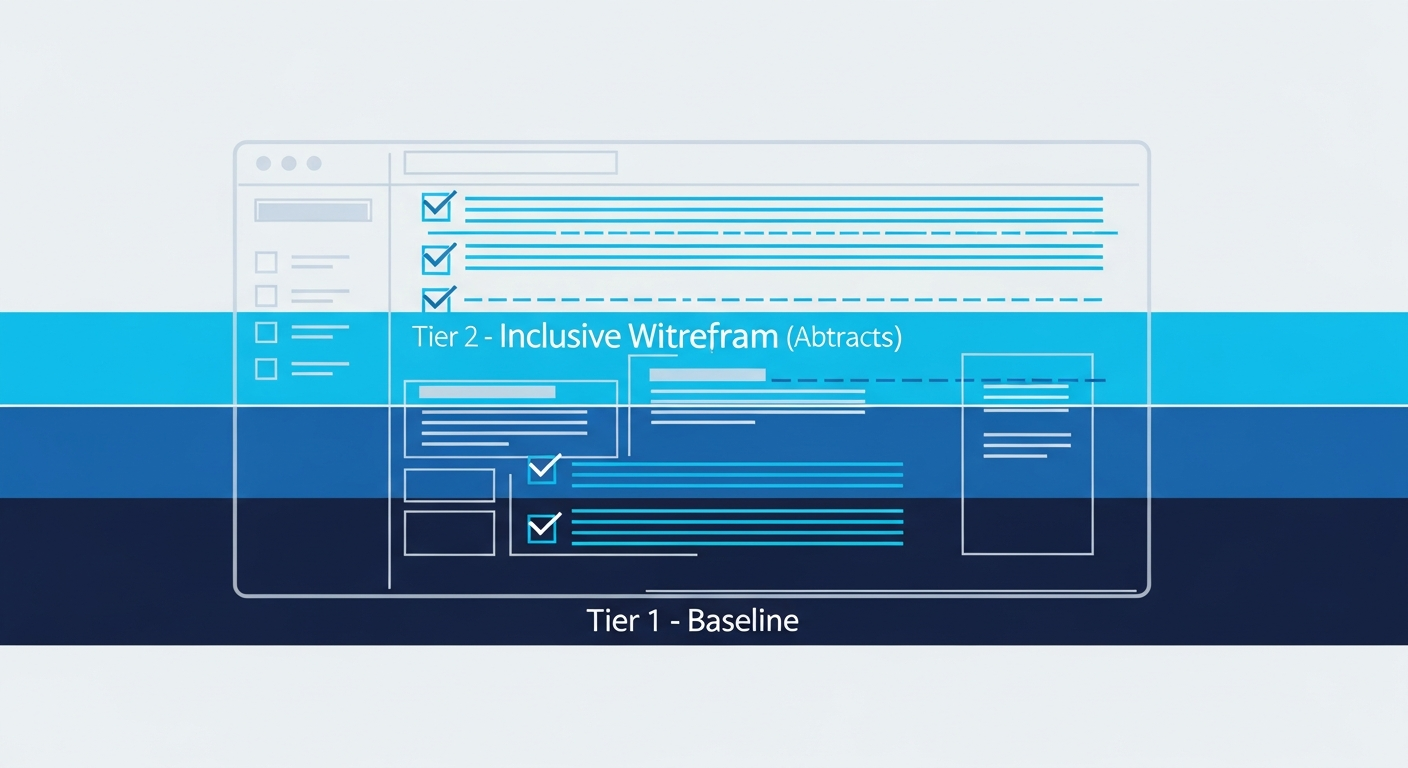
Section 508 is part of the Rehabilitation Act. For years it had its own quirky technical rules, but the 2018 "508 Refresh" aligned it with WCAG 2.1 — the same international web accessibility guidelines used worldwide. The required conformance level is A and AA combined. (AAA, the highest tier, is not required.)
That alignment is good news. It means meeting Section 508 for web content is, in practice, meeting WCAG 2.1 AA, so the same work satisfies both U.S. federal obligations and the accessibility expectations most of the rest of the world uses.
What WCAG 2.1 A and AA Cover
The success criteria are organized under four principles — content must be perceivable, operable, understandable, and compatible with assistive technology. In concrete terms, conformance touches things like:
- Text alternatives for images and non-text content
- Captions and transcripts for audio and video
- Full keyboard operability, with no traps
- Sufficient color contrast between text and background
- Visible focus indicators and a logical focus order
- Form fields with proper labels and clear error messaging
- Content that adapts to zoom and reflow without breaking
- Markup that assistive technology can interpret correctly
Each of those maps to specific, testable criteria. "Accessible" isn't a vibe; it's a checklist with pass/fail conditions.
Who Must Comply
Federal agencies are bound directly. The reach extends to any vendor or contractor whose product or service the government buys or uses — which is why 508 conformance shows up as a procurement requirement. Beyond the federal level, many states have adopted equivalent standards, and organizations that take federal funding frequently inherit similar duties. The ADA, separately, drives accessibility expectations for much of the private sector, and courts increasingly look to WCAG as the benchmark there too.
What a VPAT Documents
A Voluntary Product Accessibility Template is the report that states how a product measures up against Section 508 and WCAG. During procurement, an agency asks for it to judge whether a product clears the bar before money changes hands. The "voluntary" in the name is misleading — for anyone selling to government, producing an honest, accurate VPAT is effectively mandatory, and an inflated one is a liability when testing later contradicts it.
How Conformance Is Verified
Automated scanners are useful but limited; they reliably catch only a portion of issues, like contrast failures and missing alt text. Genuine conformance requires manual work: navigating the entire product by keyboard alone, and testing with real screen readers such as NVDA, JAWS, or VoiceOver. A large share of WCAG criteria can only be judged by a human using assistive technology the way a disabled user would.
If you need that audit done, a VPAT produced, or a product remediated to meet these standards, that's the kind of accessibility work Sweent does — built to WCAG 2.1 AA and verified with real screen-reader testing.
Frequently Asked Questions
Section 508 requires that information and communication technology developed, procured, maintained, or used by federal agencies be accessible to people with disabilities. Since the 2018 refresh, the technical standard it adopts is WCAG 2.1 Levels A and AA. In plain terms: federal websites, software, documents, and digital content have to meet those success criteria.
Federal agencies directly, and by extension any vendor or contractor whose product or service is bought or used by a federal agency. Many state governments have adopted equivalent rules, and organizations receiving federal funding often face similar obligations. If you sell technology to the government, 508 conformance is effectively a condition of doing business.
WCAG is the technical guideline — a set of testable success criteria for web accessibility maintained internationally. Section 508 is U.S. law that adopts WCAG 2.1 A and AA as its enforceable standard for federal technology. So WCAG defines the 'how,' and 508 makes a specific version of it legally required for a specific audience.
A VPAT, or Voluntary Product Accessibility Template, is a document that reports how well a product conforms to accessibility standards like Section 508 and WCAG. Agencies routinely request one during procurement to evaluate a product before buying. If you sell to the government, you'll almost certainly be asked for a VPAT, even though the name calls it voluntary.
Through a combination of automated scanning and manual testing. Automated tools catch a fraction of issues — missing alt text, color contrast failures — but real conformance requires manual keyboard testing and screen-reader testing with tools like NVDA, JAWS, or VoiceOver. Many criteria simply can't be verified any other way.