Web Development Cost by Build Type: The Real Ranges
Web development costs $5k for a marketing site, $40k–$150k for a web app, and $150k+ for a platform. The real breakdown by build type, and what shifts...
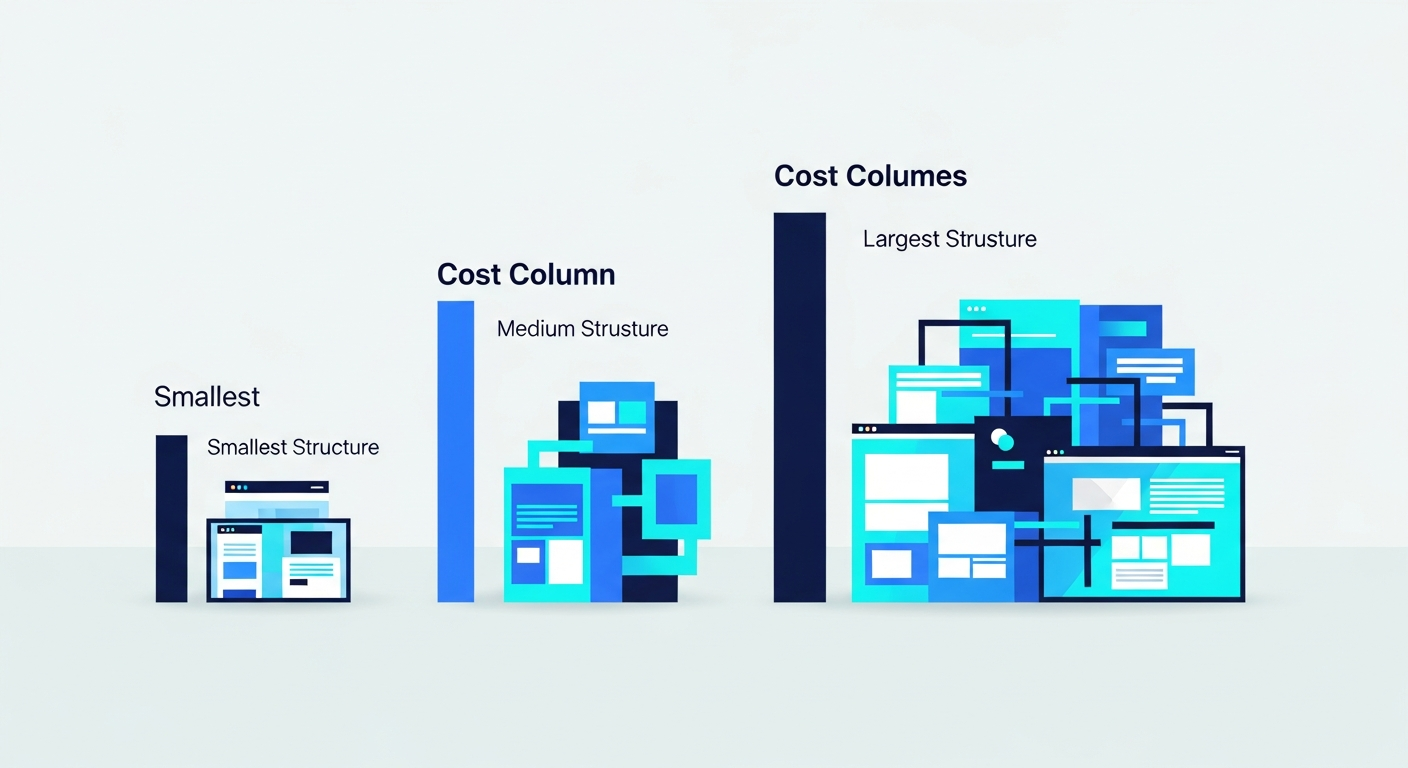
Web development costs split cleanly by what you're actually building: a marketing site runs $5,000 to $30,000, a custom web app runs $40,000 to $150,000, and a multi-tenant platform starts around $150,000 and climbs from there. The gaps between those bands are large because the work behind each is genuinely different. The useful question isn't the average — it's which band your project belongs to.
Three Build Types, Three Price Bands
Marketing site — $5,000 to $30,000. A handful of pages, a CMS so your team can edit copy, a contact form, basic SEO and analytics. Most of the cost here is design and content wiring, not engineering. A small studio ships this in two to six weeks.
Web app — $40,000 to $150,000. Now you have user accounts, a database, business logic, payments, an admin area, and integrations with other systems. This is software that does work, not a brochure. Expect two to five months and a small team.
Platform — $150,000 and up. Multi-tenant architecture, role-based permissions, an API other products consume, billing tiers, an operations dashboard. These run six months to over a year and rarely finish under six figures.
What Moves You Up a Band
Three things push a project from one band into the next. None of them is page count.
- State: a page that only displays content is cheap; the moment users log in and expect their data back tomorrow, you're building an app
- Integrations: every external system you connect to — Stripe, a CRM, a shipping API, an ERP — adds build cost and a recurring maintenance tax, and integrations interact, so five cost far more than five times one
- Roles and concurrency: software serving one kind of user is straightforward; software serving admins, managers, and customers with different permissions multiplies the surface you have to build and test
- Real-time behavior: anything that updates live — dashboards, notifications, chat — is meaningfully harder than request-and-reload
A Concrete Example
A regional logistics company needed a portal where dispatchers assign drivers and customers track shipments. Two user roles, live status updates, one mapping integration, a billing export. That's a textbook web app, and it came in near $95,000 over four months. Had they wanted white-labeled instances to resell, the same feature set would have crossed into platform territory and roughly doubled.
The lesson is that scope, not page count, sets the price. Ten static pages cost less than one screen that updates in real time and writes to a database.
Rate Matters as Much as Scope
The same web app costs different amounts depending on who builds it. A $95,000 US project might land near $45,000 with a strong nearshore team. The trade-off shows up in timezone overlap, communication, and how much hand-holding the work needs — none of which appears on the quote but all of which you pay for in your own time.
Don't Forget What Comes After Launch
Launch isn't the finish line for anything in the app or platform bands. Plan on roughly 15 to 20 percent of the build cost per year for hosting, security patches, and the fixes that follow when an integration changes on you. A site you never touch again is fine; software you depend on isn't.
Sweent builds web apps and platforms for teams that have outgrown an off-the-shelf tool — send the requirements and we'll come back with a fixed price.
Frequently Asked Questions
A marketing website costs $5,000 to $30,000 — a handful of pages, a CMS, a contact form, and basic SEO. The moment users log in and save data, you've crossed into web app territory, which runs $40,000 to $150,000. Page count matters far less than whether the site stores state.
US senior developers charge $100 to $200 an hour. Nearshore teams in Latin America and Eastern Europe run $40 to $90, and offshore teams in South and Southeast Asia run $20 to $50. The lower rates come with timezone gaps and more specification work on your side, which is a real cost the invoice never shows.
A website displays content. A web app stores user data, runs business logic, handles payments, and connects to other systems. That state and those integrations are where the engineering hours go, which is why an app routinely costs five to ten times a comparable static site.
A static marketing site built on a CMS is the cheapest, often $5,000 to $15,000, because most of the work is design and content wiring rather than custom engineering. If a vendor quotes a full web app at that price, ask what's being cut.