Data Analytics Companies in Daytona Beach, Florida
Choosing among data analytics companies in Daytona Beach, Florida? Learn the pipeline-to-warehouse-to-dashboard chain and how to spot a partner who ca...
Most analytics shops sell you the last ten percent — the dashboard — and quietly assume the other ninety is already handled. It almost never is. That gap is why so many Daytona Beach businesses end up with a slick screen full of numbers nobody acts on.
So before you compare data analytics companies on price or portfolio, understand what you're actually buying.
The Chain That Has To Hold
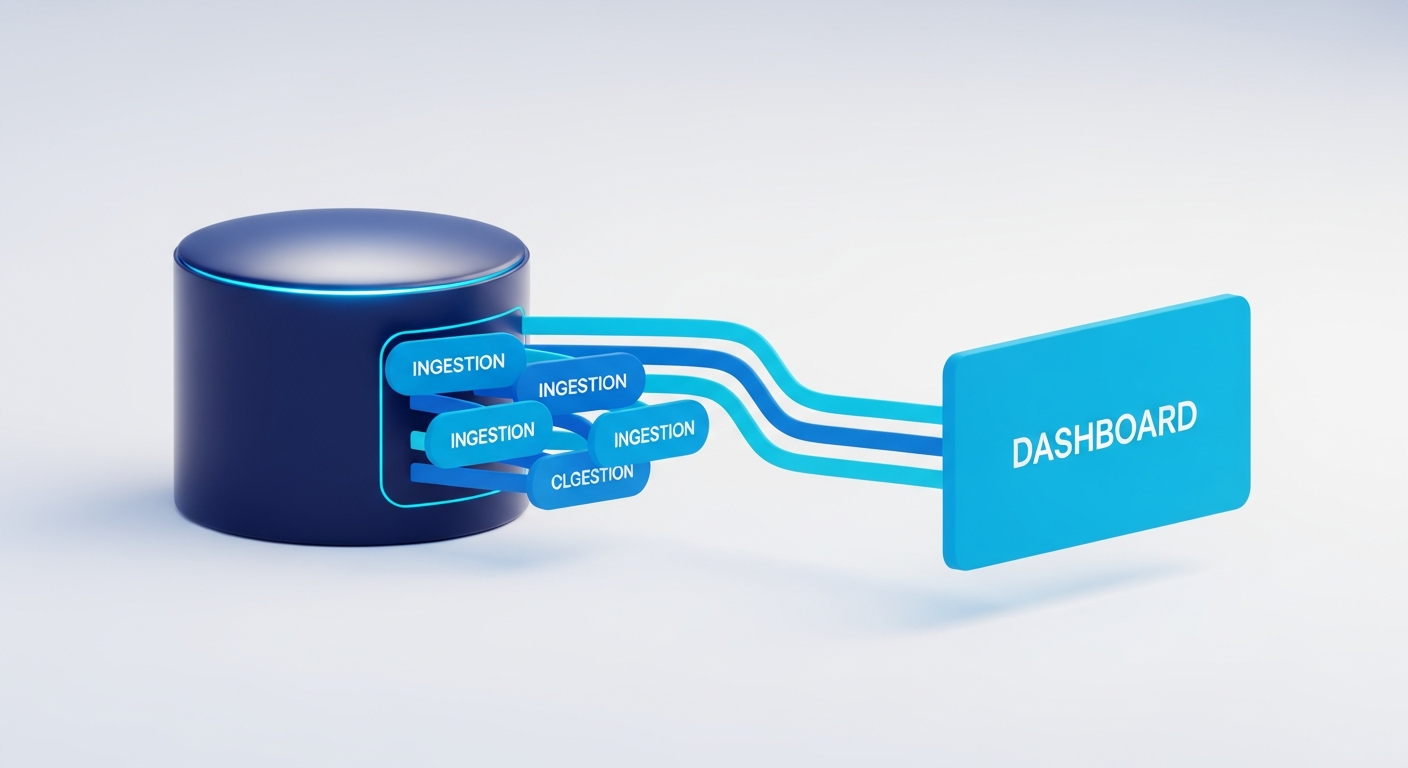
Every working analytics setup is the same chain, in order:
- Extraction — pulling data out of the systems where it lives: your CRM, your payment processor, your ops database, a pile of CSVs.
- Pipeline — the code that moves and cleans that data on a schedule, so it's current and consistent instead of stale and contradictory.
- Warehouse — a place built to be queried fast, where the cleaned data actually lives.
- Modeling — the business logic that turns raw rows into the metrics your team argues about: revenue, churn, margin, whatever drives decisions.
- Dashboard — the part you see.
A chart is only as honest as the four links beneath it. When a number looks wrong, the problem is almost always upstream of the screen.
How To Tell A Real One From A Slide Deck
Ask a candidate company one question: who builds and maintains the pipeline? If the answer is vague, or it turns out a junior analyst hand-updates a spreadsheet every Monday, you're hiring a visualization studio, not an analytics partner. Nothing wrong with that — just know which one you're paying for.
A few other tells worth checking:
- They want to see your actual data sources before quoting, not just your "vision."
- They build in your cloud account, so you own the pipeline when the engagement ends.
- They can explain where a specific number came from, tracing it back through every link.
- They'll tell you when a question your data can't yet answer needs new instrumentation first.
What The Engagement Usually Looks Like
A good partner doesn't start by buying you tools. They start by tracing where your data actually lives and how it moves today — often a tangle of exports, manual edits, and one heroic spreadsheet a single person understands. From there the work tends to run in a sensible order:
- Map every source that holds numbers you care about, and how trustworthy each one is.
- Stand up pipelines that pull and clean that data on a schedule, with alerts when something fails.
- Land it in a warehouse and pin down the metric definitions so everyone counts the same way.
- Put dashboards on top, then sit with your team to make sure the numbers match reality.
Skipping straight to step four is exactly how you end up with the screen nobody trusts.
Who This Is For
Companies drowning in spreadsheets that don't reconcile. Operators making six-figure calls off a gut feel because the report takes three days to assemble. Teams that bought a BI tool and discovered the tool was the easy part. If any of that sounds familiar, the problem isn't your people — it's that nobody built the plumbing.
Where We Fit
Sweent is a Daytona Beach software company that builds the full chain on AWS and modern data tooling — pipelines in Python, a warehouse sized to your data, models your team can verify, and dashboards on top. We do this work as senior US-based engineers embedded with your team, the same way we deliver our other engineering work, so your people learn the system instead of renting it.
We're not the only capable shop in Florida. But we'd rather you pick the right one than the cheapest deck — so here's the test: ask each finalist to walk a single number from the dashboard all the way back to its source system. The good one can. The rest will change the subject.
Frequently Asked Questions
Ask who builds the pipeline that feeds the dashboard, not just who designs the dashboard. A lot of shops are really visualization studios — they make a pretty chart on top of a spreadsheet someone updates by hand. A real analytics partner owns the whole chain: getting data out of your systems, cleaning it, storing it somewhere queryable, and only then putting a chart on top.
No. We're in Daytona Beach and happy to meet Florida clients in person, but the work itself happens in your cloud account over secure connections. Being local mostly means you reach a US-based engineer in your timezone instead of a ticket queue.
Mostly AWS plus modern data tooling and Python. The exact services depend on your data volume and how fresh the numbers need to be. We don't lock you into a proprietary platform you can't leave — everything runs in your own cloud account.
Usually, yes, and it's a common starting point. Distrust almost always traces back to the pipeline, not the chart — duplicate records, a join that silently drops rows, a refresh that quietly failed last Tuesday. We trace a number back to its source and fix where it breaks.