Best Full-Stack Development Services: What They Cover
What full-stack development services cover end to end — front end, back end, data, and deployment — and why owning the whole stack matters.
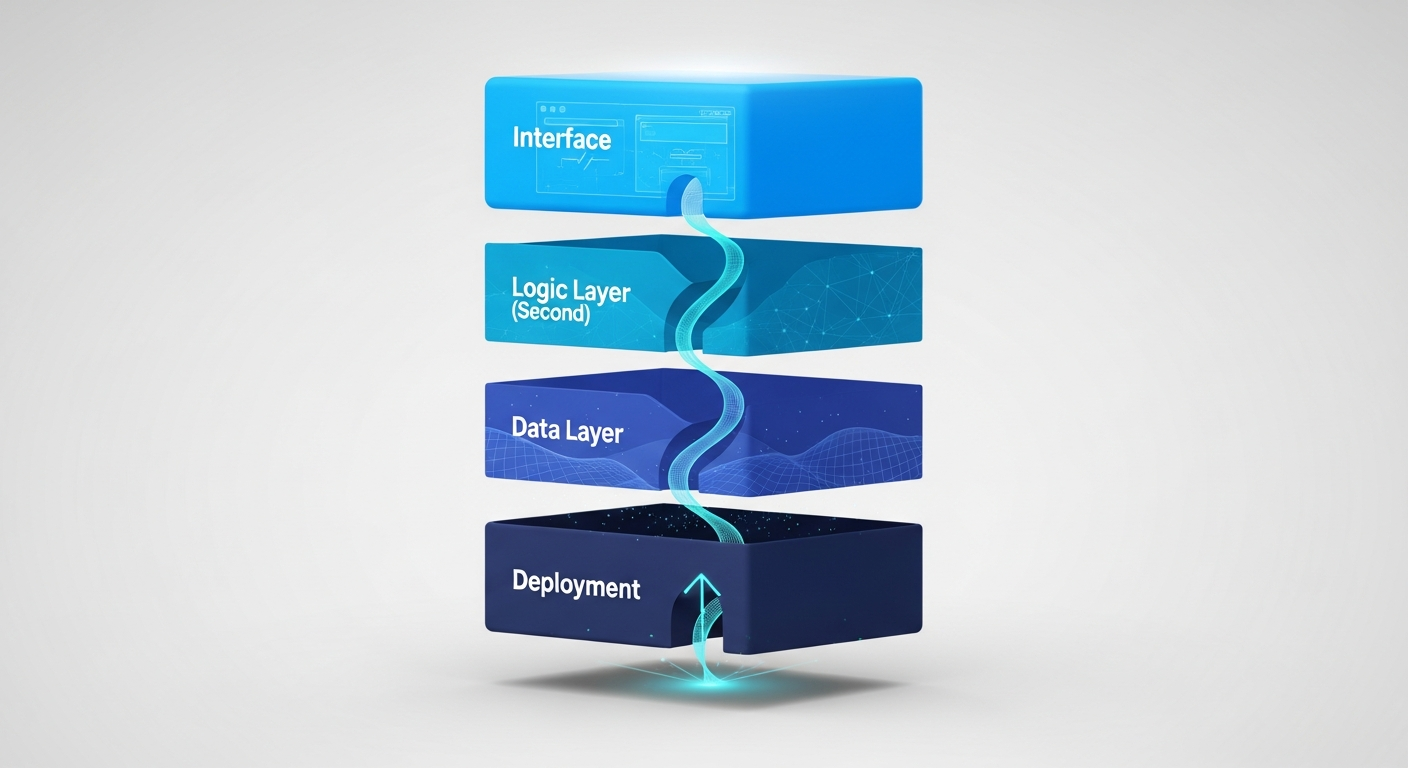
"Full-stack" is a much-used phrase. Before you compare providers of full-stack development services, it helps to know what the whole stack really includes — and why the seams between layers, not the layers themselves, are where projects fail. The best providers are strong across all four layers and deliberate about how those layers meet.
The Front End Is What Users Judge You On
Full-stack development begins where your customer does: the interface. That means more than visual design. It means accessibility, performance on real devices, sensible state handling, and behavior that stays predictable as the app grows.
The phrase "best full-stack development services" usually conjures a polished UI, and that instinct is half right. The interface is where trust starts. It's also where the most common shortcuts hide: an app that looks finished but is unusable on a slow connection, breaks for keyboard users, or freezes the moment real volume arrives. Judging the front end means looking past the screenshots to how it behaves under conditions the demo never shows you.
The Back End Is Where the Rules Live
Behind the interface sits the logic that makes the product trustworthy: business rules, validation, authentication and permissions, integrations with the other systems your business runs on. This is where correctness and security are won or lost.
A useful test is to ask how a provider designs an API before any code exists. Good answers describe thinking through the contract — what the front end needs, how errors are shaped, how the interface will evolve — so the two sides can be built in parallel without constant rework. Weak answers treat the API as whatever falls out of the database. That difference, invisible in a demo, is the difference between a back end you can extend and one you fight.
Data Is the Layer You Live With Longest
Your data outlives every redesign. Schema design, migrations, indexing, backups, and the line between what you store and how you query it — these decisions compound. Strong full-stack services model data for how your product will actually be used, plan migrations so changes are safe, and protect against the quiet disasters: lost records, corrupt state, a backup nobody tested. The data layer is unglamorous, and it's the one you can't casually redo.
Deployment Turns Code Into Something Real
Software that only runs on a developer's laptop isn't done. The final layer is getting it live and keeping it live: build pipelines, environments, monitoring, logging, and a rollback path for the day something breaks. Teams that own deployment ship safely and often, see problems before customers do, and recover fast.
This layer is also where ownership becomes concrete. Software deployed to a provider's accounts, with monitoring only they can see and a pipeline only they understand, is software you're renting access to. The better arrangement runs everything in your own cloud accounts, with logging and dashboards you can read and a deployment process documented well enough that another team could run it.
Why One Team Across the Whole Stack Matters
The expensive failures rarely live inside a layer. They live in the seams — the front end assuming one thing, the API returning another, the database modeled for a use case nobody confirmed. Full-stack services matter because one team reasoning across all four layers can design those seams on purpose instead of discovering them in production.
Sweent is a US-based full-stack team whose senior engineers work across front end, back end, data, and deployment, with the code shipping into your own repositories and infrastructure. We're one solid option to weigh; the test above works on any provider you compare us against.
Frequently Asked Questions
Four layers: the front-end interface users interact with, the back-end logic and APIs that enforce your rules and security, the data layer that stores and queries information safely, and deployment that gets the software live and keeps it running. The best providers are genuinely strong across all four.
Most expensive failures happen in the seams between layers — mismatched assumptions between front end, API, and database. A team reasoning across all four layers can design those seams deliberately instead of debugging them in production.
It depends on the work. Specialists shine on deep, isolated problems; full-stack teams excel at products where the layers must fit together coherently. For most product builds, continuity across the stack reduces the integration risk that specialists, working separately, can introduce.
Front end, back end, data, and deployment, handled by US-based senior engineers, with the code shipping into your own repositories and infrastructure so you keep full ownership.